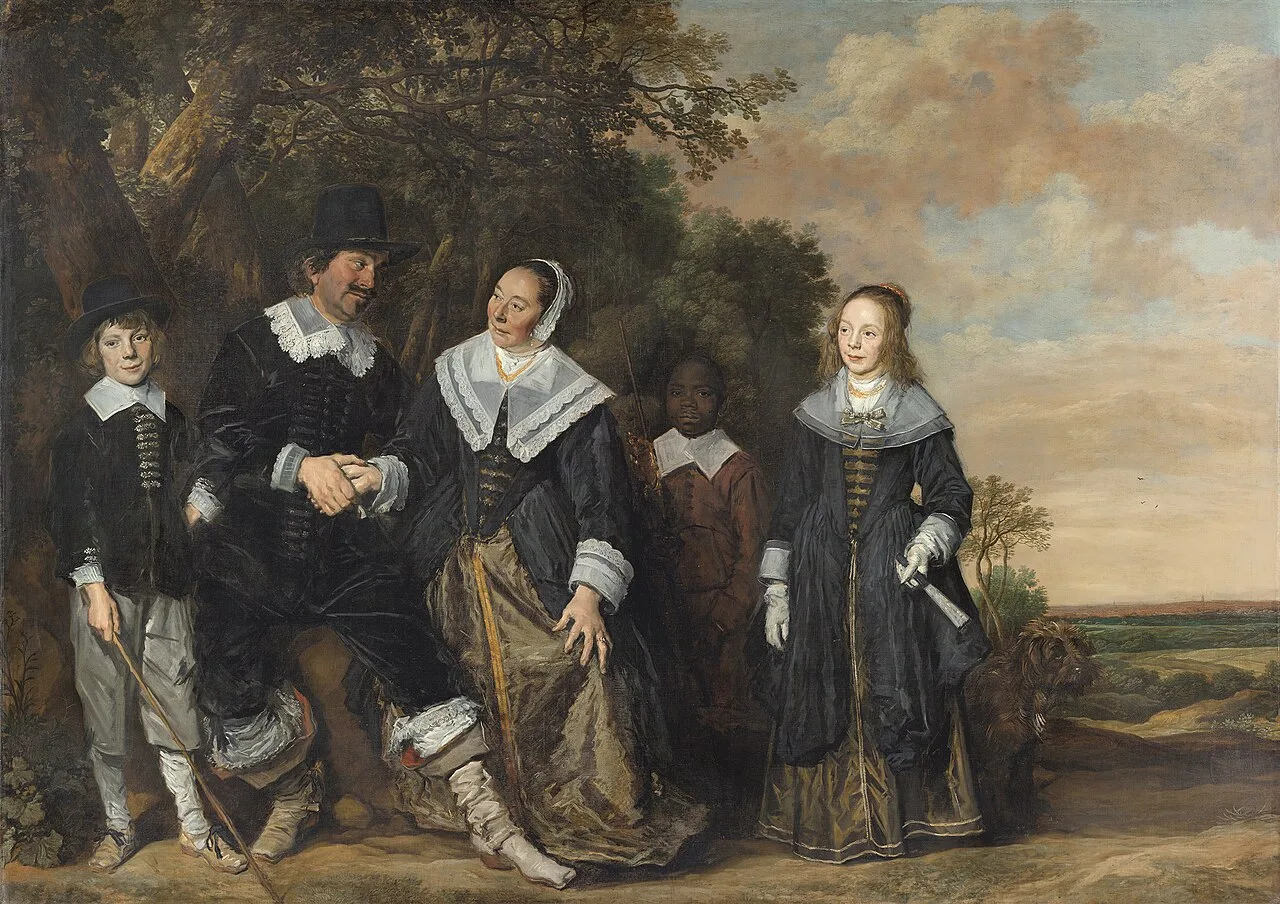
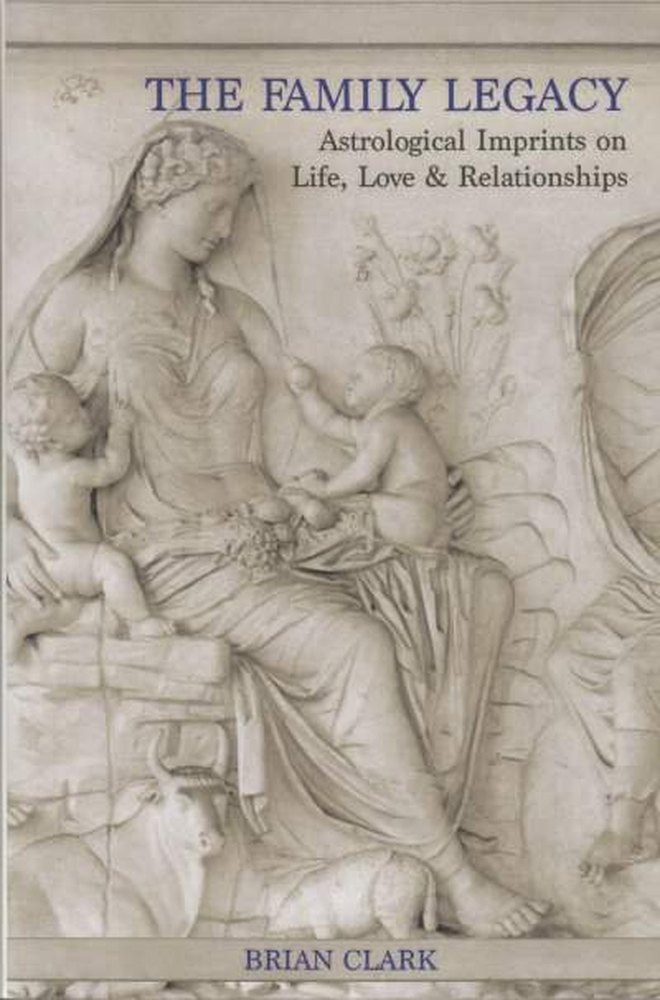
The Family Legacy
Brian Clark
A birth chart can be read as a family portrait.
Home Again, and a Child Again
Many people know this experience. You have worked out in the world for years and become an adult who makes decisions, yet after a few days at home for the holidays you are a teenager again. One remark from your mother can get you worked up; you still talk to your older brother or sister in the tone you used as a child; who gives way first, who takes the blame for whom, has hardly changed in decades. Sometimes, in a fight with your partner, you hear yourself saying almost exactly what your mother once said. After so long away from home, why is the family's way of doing things still with you?
Brian Clark's The Family Legacy: Astrological Imprints on Life, Love & Relationships answers exactly this question; it was published in English by Astro*Synthesis in 2016. Clark was born in Canada and lives in Australia; in 1986 he founded the astrological teaching organization Astro*Synthesis in Melbourne, and he has taught astrology for forty years. Clark's view is that the imprint a family leaves on a person is already in the birth chart at birth: the images of the parents, what has been handed down in the family, a person's place among the siblings, can all be found in their own chart. When he discusses birth order, he puts it very directly:
Our families are a system we may physically leave; however, they are not a system we can psychically leave
The reason is that these imprints are laid down gradually as a person grows up in the atmosphere of the home and among brothers and sisters, so however far you move, they go with you. He has also found that when a family's charts are compared, the same signs, degrees and aspects often appear again and again, and the parents' Sun, Moon and angles are often close to the child's. Across twenty chapters, the book begins with the houses connected to the family, moves on to parents and siblings, to how the Moon records a person's earliest attachments, and finally to the ages a family passes through together.
Clark tells of a mother who came to see him. She was worried that her twenty-nine-year-old son could not find suitable work and had never settled down. Clark noticed that mother and son were both going through a Saturn return at that moment, one cycle apart. Leaving the son aside for the moment, he asked her to recall what she had been thinking about and wanting at thirty. She remembered that she too had been lost then, without direction. With that, she could see her own stretch of years back then and her son's present stretch as separate, and she felt a little more understanding toward the thirty-year-old she had been. When this book talks about family, it is often talking about this kind of overlap: the stage a child is passing through is one the parents have mostly passed through too, and sometimes are passing through still.
Is the Fourth House Father or Mother?
Astrology has long assigned places to family members. Since ancient times the third house has been the house of siblings and the fourth the house of parents. Two thousand years ago Ptolemy said that the Sun and Saturn are by nature connected with the father, the Moon and Venus with the mother. But when it comes to which parent the tenth and fourth houses stand for, the schools disagree. Modern astrology mostly gives the tenth house to the father; traditional astrology says the tenth is the mother. Howard Sasportas also took the tenth to be the mother, on the grounds that in childhood the mother is our whole world.
Clark lays out all these views and then asks the question differently. In his view, the tenth house may describe how the parental system shaped a person's way of seeing the world, rather than one particular parent. For the two people who are father and mother, the Sun and Moon are a better fit.
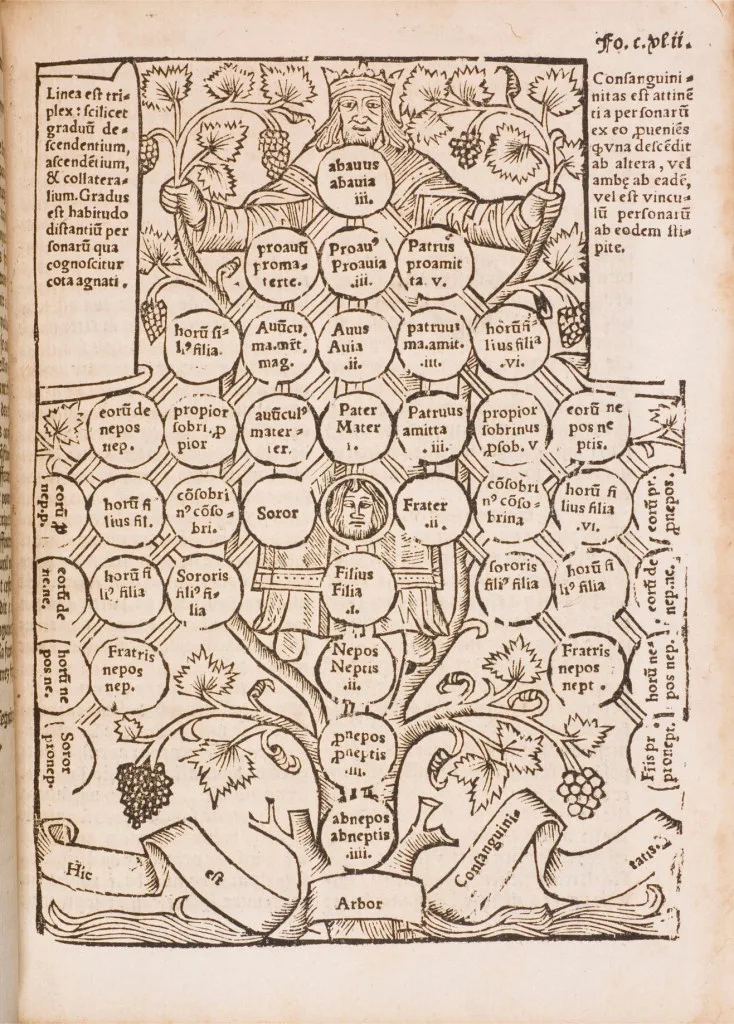
With this shift, the family turns from one or two houses into a system. Clark says a person's natal chart is systemic: it shows both how this person responds to their family and how the other members take part in the system. He borrows the view of the family therapy pioneer Salvador Minuchin that a person's sense of identity comes from a sense of belonging and a sense of separateness. Clark places belonging in the water houses, the fourth, eighth and twelfth, where what is handed down in the family is stored, and separateness in the air houses, the third, seventh and eleventh, which show how people relate as equals. The parental line is layered from top to bottom, the sibling line is level, and only together do they make a family.
This is also how siblings come back into the family. Clark points out that the early theories of Freud and Jung analysed only the parents' influence on the child; no one studied the sibling layer. Adler was the second son in his family and saw from his older brother how birth order works, but in the first half of the twentieth century Freud's theories prevailed. Only toward the end of the twentieth century, as people came to value relationships between equals more and more, was the influence of siblings on adult relationships taken seriously. In 1999 Clark published The Sibling Constellation, a book entirely about siblings, and some of the ideas about brothers and sisters in this book were first put forward there.
This book grew out of the family module that Clark and his partner Glennys Lawton designed for the four-year Astro*Synthesis course. Glennys is a registered family therapist as well as an astrologer, and Clark calls her the book's mentor and collaborator. The book often cites Liz Greene, Howard Sasportas and Dane Rudhyar, and also Bowlby's attachment theory and Erikson's life stages. Clark uses these psychological and sociological ideas to make astrological meaning clearer, and he also makes plain that one system of thought cannot simply be laid over another.
But This Is Your Horoscope
When a client talks about her father, Clark often finds that the father she describes is almost a portrait of the Sun in her own chart. At that point he will say:
But this is your horoscope; how do you feel about this pattern within your own self?
He asks the same about the Moon and the mother. The point of the question is to take back what has been projected onto the parents, so the person can see that it is also a pattern within themselves. For Clark, father and mother are two real people, and also two images inside a person. We first come to know the Sun and Moon through living with our parents, but in the end both images are in our own chart. So when he writes about parents, his emphasis falls on the two people inside you.
He looks at a person's role in the family in the same way, going further down. Clark says that whatever the family lacks, the child often sets out to supply. If the parents' marriage is unhappy, the child may become the father's or mother's emotional partner. If the home lacks warmth, the child becomes the one who looks after others. In his consulting work he has also noticed that some people are especially wary of the very skill they are best at, feeling that it is not really them. He goes looking for the source of that wariness, and the answer is often that the family assigned them this role early on. Say you were always the most sensible child in the family, the one best at looking after people; when others praise you for being considerate, you may feel a little resistance inside, and that resistance may come from here.
Reading It Back into Your Own Family
Arguments that keep recurring with a partner are sometimes an unfinished chapter between siblings. Clark says people often marry someone who resembles one of their siblings. His own example is in the book: his only brother married and left home when Clark was seventeen, and when he drew up his sister-in-law's chart, he found it was almost his own. His wife was born three weeks before his brother, with the same positions as his brother from Mars outward. Once you recognize this layer, in the middle of a fight you can ask yourself: am I arguing about the thing in front of me, or about the one I never finished arguing as a child?
Leaving home is another situation. Clark cites the family therapy pioneer Jay Haley: to be able to leave home with peace of mind, a person needs four messages from their parents: you can go, we believe in you, we will miss you, we will be fine. Whichever one is missing tends later to become a demand in close relationships. Someone who lacked the first needs the partner to prove they are free in the relationship. Someone who lacked the third needs the partner to prove they are needed. Someone who lacked the last, by contrast, cannot bear the partner depending on them too much.
In midlife the family takes on another shape. Clark says that in midlife, looking back you see your children, looking ahead you see your parents. Parents begin to need care, or die, and brothers and sisters have to work out afresh how to share the load. The book tells of two sisters who stopped speaking in their early twenties. Their father's will left everything to his live-in partner, including what their mother had left. The two sisters went to court together, and in the course of the lawsuit came to know each other again, because only the two of them were left of the original family. Clark's explanation is that a fight over an heirloom is often a fight over whether the weight of the relationship will be acknowledged.
Chapter by Chapter
The book has twenty chapters. The first two are introductory, and the rest fall into three parts: Part I enters the houses connected with the family, Part II covers parents, siblings and the Moon's attachments, and Part III covers the patterns and timetables a family passes down from generation to generation. Below, the chapters are taken in groups.
Chapter 1: Soul and the Family System; Chapter 2: Fate, the Soul's Imprint: Myth, the Language of the Soul
Clark says at the outset that what a family hands down is not only money and chromosomes but also emotional and psychological matter; every family has its own story. The second chapter tells this through a Greek myth. Dionysus gives a jar of wine to the centaur Pholus, telling him to keep it sealed and open it only when Heracles comes. Four generations later Heracles does come; Pholus lifts the lid, the scent of the wine draws all the other centaurs, and chaos breaks out. Clark reads in this story how what a family seals away is often opened only in the fourth generation, and how the one who opens it mostly never knew the generation that sealed it. He also works it out on the chart: starting from the fourth house and counting down four generations by derived houses gives the fourth, seventh, tenth and first houses in turn, all four angular houses.
Chapter 3: Water and Air, Together Apart: The Elements of Bonding; Chapter 4: The Water Houses: Emotional Seas in the Harbour of Home
Chapter 3 covers what water and air each want. Air wants distance, because only by standing back a little can you see the other person clearly, and only by seeing them clearly can there be a relationship. Water wants merging; attachment can only form when a person is willing to show vulnerability to another. Both have a dark side: air easily becomes distant and cold, water easily becomes unable to tell self from other. Chapter 4 covers the three water houses: the fourth is the atmosphere of the home, the eighth is how close the parents are to each other, the twelfth is what earlier generations left behind that has not yet been spoken. On the eighth house, Clark points to something easily overlooked: caring, generosity, sacrifice, all the things people are praised for, can also be used to ward off intimacy. Someone who is always giving may be using that giving precisely to keep others from coming close.
Chapter 5: Planets in the 4th House: Delineating the Fundamental House of Family
This chapter reads the fourth house planet by planet, reading each one as a figure who might appear in the home. Take Saturn. With Saturn in the fourth, the home is about rules, tradition and authority. Rules can give a child a sense of safety, but when they are too rigid they make the child anxious, and when the child grows up they often have to go a long way to find their own place. People raised like this keep waiting for a word of approval, yet however well they do, it never feels like enough, and when the praise does come, it is not as gratifying as they imagined. Clark's conclusion is that Saturn is ultimately about the internalization of authority: a person has to build up, slowly, the voice inside that can make decisions.
Chapter 6: The Air Houses: Individuality and Relationship; Chapter 7: Planets in the 3rd House: Delineating the Formative House of Connection
The air houses, the third, seventh and eleventh, are houses of relationship. Clark says siblings are a person's first social laboratory, where relationships between equals are first learned. In chapter 6, the seventh-house section deals with projection, which he divides into three steps. At first the other person shines with the good side of the planet: someone with Saturn in the seventh is first drawn to a person who is successful in their career. After a while, the same qualities become grating, and the successful person seems condescending and cold. In the third step, one begins to recognize these qualities as one's own. At the second step, some choose to change partners instead, so as to experience the opening fascination all over again. Chapter 7 reads the planets in the third house one by one. The Chiron section notes that the wounds between siblings are mostly unintended, often just a nickname or a “you're so stupid”.
Chapter 8: Angles and Cusps: Doorways, Borders and Keys
Clark sees the vertical axis of Midheaven and IC as the parental axis, like the spine of a chart, holding a person upright in the world. The horizontal axis of Ascendant and Descendant is like the branches spreading out from a family tree: a person's own capacity to enter social relationships. The sign on a house cusp is, for him, like someone standing guard at the door of each house, an energy waiting to be respected. So after each element the chapter leaves a few questions for readers to think about themselves. If the fourth house cusp is in a fire sign, for instance, it asks: does fire sit well with your need for security? Was this element ever respected in your family?
Chapter 9: Family Systems and Relationships: Parental and Sibling Dynamics; Chapter 10: Planetary Archetypes: Personalities of the Family System; Chapter 11: Planets, Aspects and Houses: Delineating the Family
Chapter 9 reads the aspects between Sun and Moon as the parents' marriage in the child's mind. With a Sun–Moon conjunction, the parents seem to be one, and the child may feel unable to get in between them, and in later life may not easily feel part of a team. Chapters 10 and 11 treat the solar system as a family: the Sun and Moon are the parents, Venus a sister or aunt, Mars a brother or uncle, Jupiter and Saturn bring in society and rules, and the outer planets bring older, less manageable family patterns. Clark gives an everyday example: when you are forgetful you think of Auntie Pat, when you are careless you think of your younger brother Frank. Getting to know these figures inside you lets you gradually take back the expectations projected onto your real family.
Chapter 12: The Moon: Love, Attachment and the Lunar Landscape; Chapter 13: Moon Signs and Lunar Aspects: Attachment Impulses and Influences
Throughout a person's life, the Moon stands for the infant inside them. Drawing on Bowlby and Ainsworth's attachment theory, Clark distinguishes three patterns. When the child calls and care comes, that is secure attachment. When care comes only some of the time, the child is always anticipating what will happen next and never feels safe. When care is consistently lacking, the child simply avoids closeness to protect itself. He also says everyone has some of all three. Chapter 13 goes sign by sign through what the Moon needs before it will attach, then through the Moon's aspects to each planet. The Moon–Mars section describes families that keep love and anger apart, as though loving someone means you cannot be angry with them, so the child learns not to say what it wants.
Chapter 14: Family Templates: Order and Chaos in the System
This chapter is about birth order. In his family development class, Clark divided the students into four groups by birth order. The eldest children gathered quickly, followed the instructions, asked first how long the exercise would take, then went to find a place to meet, usually his consulting room. The youngest went outside and laughed as they compared who had been picked on worst as a child and how they had provoked their older siblings in return. The only children in the class went along with the eldest. The middle children stayed in the classroom, wondering the whole time what the other groups were doing, and someone always said: I bet the youngest are having the most fun. Clark goes on to write that middle children often come to know themselves through other people's eyes.
Chapter 15: Patterns Through Time: Psychic Spells in Families
Here Clark borrows Averil Earnshaw's idea that people live at once in Clock Time and Family Time. The age at which something major happened in the family is imprinted on the family members who survive it, and at the same age or anniversary the old feelings rise again. What went unfulfilled in a family is passed down in the same way. Take a ballet dancer with several planets gathered in the tenth house: her career was very successful, yet she herself was unhappy. Her path in dance had been pushed along by her mother, who had given up her own dancing career when she became pregnant with her. Mother and daughter both lived under the familial edict of “doing the right thing”.
Chapter 16: The Passing of Time: The Family Life Cycle; Chapter 17: Full Circle: Family Passages from Conception to Death
One person's major transits affect the whole family, because a family's charts often emphasize the same signs and degrees. Chapter 16 uses Jupiter's twelve-year cycle to divide life into seven stages, from childhood to the elder years after seventy-two. Of these, adolescence, midlife and sixty to seventy-two are transitional periods, the most unsettled and the most likely to repeat family patterns. Chapter 17 places this timetable within the family. Around fifteen a child meets the first Saturn opposition; the parents meet this aspect again around forty-four and seventy-four, and how they got through it back then shapes how they treat the child in front of them. The child's first nodal return at nineteen also stirs up the hopes and dreams the parents had at that age. As a child passes a threshold, the parents' own unfinished threshold is touched again. The four messages about leaving home are found in this chapter.
Chapter 18: Adult Children: Transits, Progressions and the Evolution of Family Relationships
Parents leave, children arrive, and so Clark writes:
the only possible lifelong companion is the sibling.
Siblings are fellow actors in the family drama, witnesses to your early years, and keepers of memories you have long since forgotten. This chapter follows the relationship through the progressed Moon. The progressed Moon goes round about three times in a lifetime, and each time it enters the third house, sibling matters come up again. Clark tells of a woman client who had had no contact with her brother for more than twenty years. He had just mentioned that her progressed Moon had entered the third house when she said that last month she had received a call from her brother, and he was coming to visit next week. The progressed Moon touching the third house cusp is like a bell ringing; this time what rang was really the phone.
Chapter 19: Plotting the Ancestors: Genes, Genealogy and the Genogram; Chapter 20: A Family Portrait: Freud's Legacy
Chapter 19 teaches readers to draw a genogram, covering at least three generations and centred on the parents, noting beside the names each person's relationships, character and the events that happened, so as to see which patterns repeat. Clark likes to draw it by hand first, on paper no smaller than A3; he himself often uses large sheets of butcher's paper, because drawing by hand lets one use it with more confidence in consultation. Chapter 20 devotes a whole chapter to Freud's chart. Freud was his mother's eldest son but his father's third, and his two half-brothers were about his mother's age; the eldest already had children, so Freud was an uncle from the moment he was born. His IC is in Aquarius, and its ruler Uranus is conjunct his Sun and Mercury; from this Clark reads an unusual family whose foundations seem to have cracked. Freud himself recorded a slip in The Interpretation of Dreams, where he wrote Hannibal's brother in place of Hannibal's father; his explanation was that it would have been much pleasanter to be the son of his brother than of his father. Clark reads this as the roles of father and elder brother having become mixed together in his mind, which is why as an adult he always wanted to be a father to his colleagues and found it hard to relate to them as equals.
How to Read This Book
If you want first to see how your parents appear in your chart, chapter 9 and chapters 12 and 13 are the most direct: the Sun, the Moon and attachment are all there. For siblings and partners, read chapters 6 and 7 and chapter 18. If you are going through thresholds such as leaving home, marrying, the birth of a child or parents growing old, the age tables in chapters 16 and 17 are the most useful. Chapters 5, 7 and 11 are entries planet by planet, best looked up against your own chart rather than read straight through.
When reading these entries, keep Clark's own caution in mind. He says these descriptions come from what he has seen in consultation, and written up as entries they can easily seem rigid, which is not his intention:
these are not delineations so much as amplifications of possibilities.
So where something does not fit you, there is no need to force it. Where something does fit, take it only as a starting point, and go back to think about what really happened in your family.
The book has its difficult side. It is long, and draws heavily on psychoanalysis, family therapy and Greek myth; readers who have not read Freud and Jung will need to digest some passages slowly. Some of its ideas are the author's own experiments, such as using derived houses for birth order, the eldest through the fifth house and the second child through the seventh; Clark admits this may look a little far-fetched on the surface but is worth exploring. Many of the case histories involve family upheavals and things left unsaid, so you may want to read slowly. Also, many of his methods call for the charts of parents and siblings and a genogram, and the ordinary reader may not have these to hand. Fortunately, at the end of the Freud chapter he says that an astrologer who understands family dynamics can do good family consultation with a single chart.
Your Family of Origin in Depth uses that single chart: your own. The Sun, Moon and Saturn in your chart are read as the father, mother and self inside you. Siblings take up several chapters of this book, so the report looks closely at your third house and your birth order in the family, at how among your brothers and sisters you learned to relate to people as equals, and at how this was carried into your later partnerships and friendships. The report also includes a timetable for this family: the ages in your life that are thresholds for the family are calculated precisely by the program, and the report discusses what each threshold means for you and for this family.
The report is about the family inside you; it does not pronounce on what your parents and siblings are like as people, which is the same thing Clark means by the question he asks his clients. And it reads only the part of your chart that concerns the family. The book's title, The Family Legacy, says as much: in the last sentence of chapter 20, Clark writes that a person's horoscope is their family legacy.
 Your Family of Origin in DepthSee report · $29