
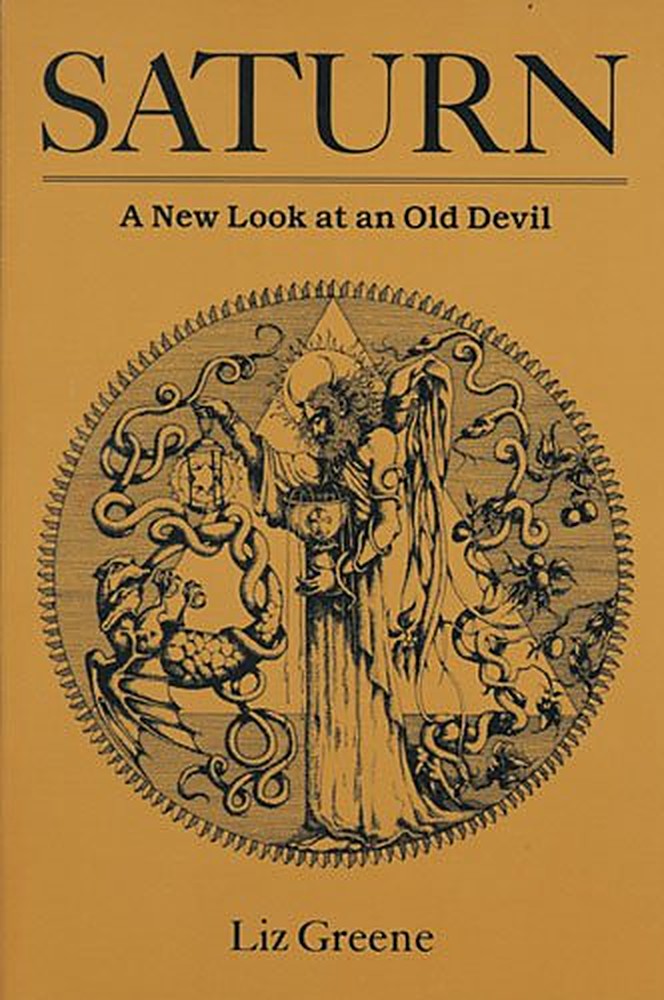
SaturnA New Look at an Old Devil
Liz Greene
The thing you have spent years walking around is often found where Saturn falls.
Why We Fear Saturn
When people first get hold of their birth chart, the Sun and Moon are what they look for first, and Saturn is what they least want to find. Nearly every astrology book will tell you that whichever house Saturn occupies, the affairs of that house will be restricted, will come late, and will cost you more hardship than they cost other people. If it falls in the seventh house, you start worrying about marriage. If it squares the Moon, you worry that happiness will never come easily to you. By the end of the book you know your life is hard, but not why it is hard, and still less what you can do about it.

Saturn: A New Look at an Old Devil, which Liz Greene wrote in 1976, answers exactly this. Greene is an astrologer who also trained in Jungian analysis, so when she looks at a placement she does not first ask what will happen. She first asks what this person is afraid of, and how he has arranged his life so as never to run into it.
Take Saturn in the sixth house. One kind of person hates his job and has plenty to say about his boss and his pay, yet whenever a real chance to leave comes along, he always finds a reason to stay. The traditional reading stops there: the work is hard, be patient. Greene keeps looking. However miserable the job, it is at least safe and familiar; leaving it would mean facing the question of whether he is actually any good, so he would rather stay and complain. Greene writes of him:
He may very neatly lock himself into his own prison
What he does not know is that the key has been in his own hand all along. The whole book is about that key. Saturn in each sign and each house, in aspect to each planet, meeting between two people's charts: wherever Greene goes, she asks the same thing. What is this person afraid of, and what can he do about it? When something keeps happening to you, with different people and in different cities, and you have blamed others and blamed yourself, the question Greene wants you to ask is this: what are you afraid of?
What She Changed
When Greene began writing, Saturn had a bad name in astrology books. Planets were still sorted into the wholly good and the wholly bad, readings still spoke of which charts were honest and which aspects immoral, and Saturn belonged on the bad side. The most an astrologer could offer was patience and restraint, or else the news that this suffering was the paying off of an old debt, to be borne with gritted teeth. Greene thought this answer no more useful than “chance”, because when someone has suffered, what he most wants to know is what the experience means and what he can do with it.
Her answer lies in the fairy tale at the book's opening. In Beauty and the Beast, Beauty draws near the terrible beast, and he turns back into a prince. To Greene, Saturn is a symbol with two faces in just this way: if you see only the frightening one, you have understood only half of the planet.
The Beast is always the dark face of the Handsome Prince
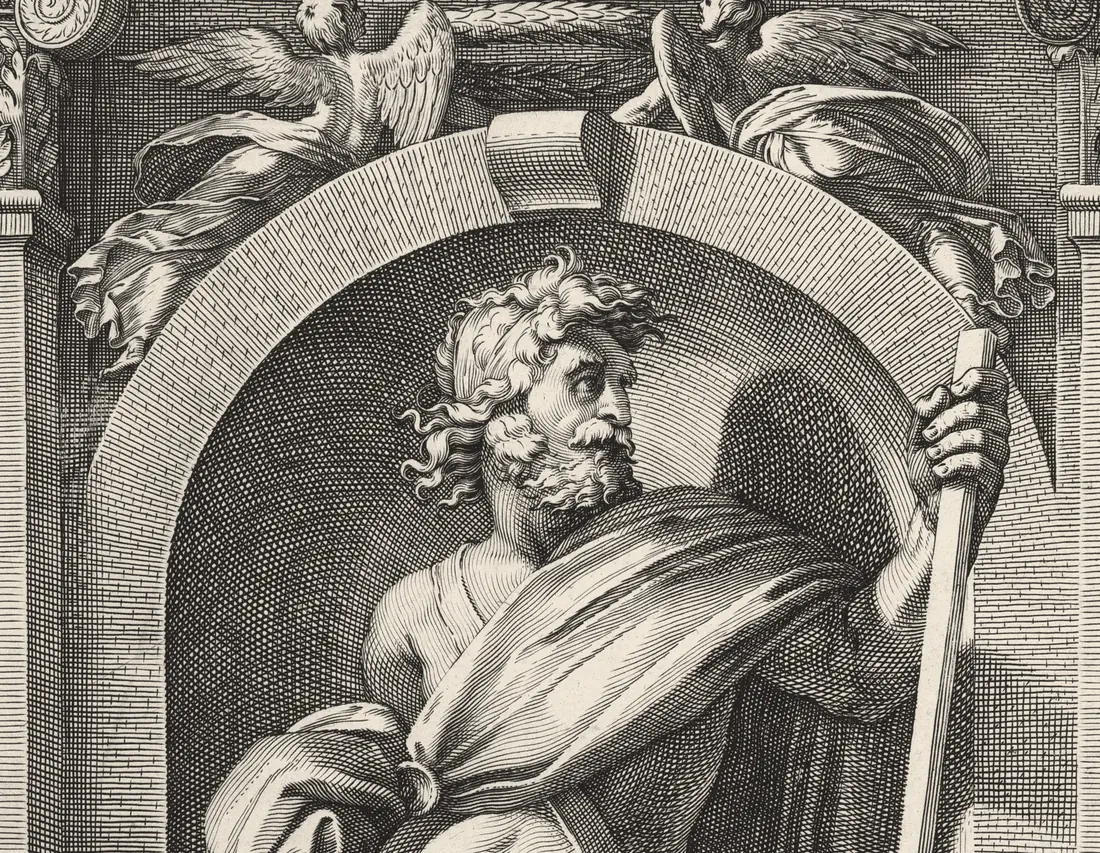
So she reread Saturn, no longer as a hand pressing down from above but as a process inside a person. Pain and limitation are the material of that process, and its aim is to make the person more whole. What Jung called the “shadow” is the part of ourselves we will not acknowledge and push out of awareness; once Greene reads Saturn alongside the shadow, many placements change their meaning. With Saturn in the seventh house, for instance, the older reading mostly stopped at obstacles in marriage. Greene goes on to ask: why do you keep choosing this kind of person? It is uncomfortable to hear, but it hands the initiative back to you. If it were all arranged in the heavens, there would be nothing you could do; if your own choices are part of it, next time you can choose differently.
Robert Hand wrote a foreword for later editions of the book that makes its place very clear. Before Greene, Dane Rudhyar had already turned astrology toward the inner life, but he wrote abstractly, and readers holding their own charts still did not know what to do with them. Greene kept the layout of the old handbooks, sign by sign, house by house, aspect by aspect, but filled it with psychological understanding, and that closed the gap. Greene later founded the Centre for Psychological Astrology in London with Howard Sasportas.
Why It Moves Readers
When Greene looks at a person, she looks at what a given situation has grown into in that particular life. On Saturn in the fourth house, the usual books stop at weak family ties and a hard childhood. She goes on to describe what this person is like as an adult. He may be unable to leave home, or he may be cold toward his family, but either way he can never truly stop caring, because what he lacked as a child is still missing. If every holiday you find yourself both wanting to go home and dreading it, you will probably pause at this passage.
Throughout the book she returns to an idea she calls “overcompensation”: the same fear can grow into two opposite shapes. The taciturn person and the one who talks endlessly but never says anything true may be afraid of the same thing. So may the person who cannot bring himself to ask for anything and the one who always strikes first to keep others down. With this idea in mind, when you look at someone around you who is especially domineering, you will no longer simply find him difficult; you will wonder what he is guarding against.
She writes of Saturn's difficulties without softening them, yet each one is left with a way out, because in her view how consciously a person can live is not settled by the birth chart. Hand makes a particular point of this in his foreword as well.
What You Can Take Away
If you always want both to draw close to your family and to get away from them, the section on the fourth house will show you that these are one and the same thing, and that your character is not split in two.
If you keep meeting partners who are cold or unreliable, the section on the seventh house asks you an uncomfortable question: does choosing them conveniently spare you a relationship in which you would have to give yourself completely? Greene also holds that the story of “he changed after we married” was mostly chosen at the first meeting. That sounds harsh, but seen this way, the next time you meet someone you can pay closer attention to what it is that draws you.
How parents see in their children what they dare not see in themselves, and turn it into criticism, is what the Saturn aspects in the synastry chapter are about. Parents who read this passage often find themselves remembering things they have said to their own children.
There is also a very everyday use. Greene suggests treating the people you inexplicably like or inexplicably dislike as objects of study, because they have most likely touched your shadow. If a colleague's ordinary remark leaves you angry for a whole day, you can set aside for the moment why he said it, and first ask yourself what part of you it touched.
Chapter by Chapter
Foreword: Hand's One Objection
The foreword begins in antiquity. Traditional astrology divided the planets into good and bad; Plotinus objected as early as the third century AD, yet the view was not overturned until the twentieth century, and this book stands just behind that change. Hand also raises one objection: Greene often treats Saturn in Aries and Saturn in the first house as the same thing, and likewise Taurus and the second house, when signs and houses are in fact two different sets of symbols. Having said so, he adds that this is no great flaw, because Greene's emphasis is on the houses: Saturn stays in a sign for two and a half years but passes through a house in only about two hours, so the houses are more personal to you. Keep this in mind as you read; where signs and houses are discussed together, take the house as the main thing.
Introduction: The Dweller at the Threshold
In tradition Saturn is thoroughly unlikable. The outer planets have glamour, the personal planets have warmth, and he has neither. Greene gives him another identity: the Dweller at the Threshold, who holds the key. If you want to enter the next room, you have to pass in front of him.
The introduction has a passage on sabotage. Some people, at the last moment, always do something that wrecks a dream on the verge of coming true: falling ill before an exam, picking a fight before signing a contract. Others see only the destruction. Greene believes there is often guilt and fear behind it, and often a wiser purpose too, one the person has not yet recognized. So if you notice that something always goes wrong just as things are about to succeed, don't rush to berate yourself. Put those occasions side by side and ask what you were afraid of at the time.
Chapter 1: In the Watery Signs and Houses
Greene puts water first because Saturn is hardest to recognize when it falls in Cancer, Scorpio or Pisces, or in the fourth, eighth or twelfth house, places that all govern feeling and what cannot be seen. Before anything happens there is a thought and a feeling. A feeling that is pushed down does not disappear; it finds another outlet, so the suffering here often seems to come from nowhere.
With Saturn in the fourth house, for example, a person sometimes buys land and houses compulsively, using visible things to make up for a lack of inner security. Others insist their childhood was lovely and that there was never any trouble with their parents; Greene sets Shakespeare's “Methinks thou dost protest too much” beside them, since someone who says a thing that forcefully usually has something there. The eighth house governs intimacy, money and crisis. Greene reads money here as a symbol of emotional dependence, so when someone with Saturn in the eighth worries about money, the worry is often whether they can rely on others. The twelfth house governs what is hidden and what is sacrificed; a common pattern is setting oneself aside to care for sick or frail parents, together with a guilt one cannot account for.
The chapter opens with how Saturn disguises itself, likening it to a competent solicitor who calculates his defence. So when others come near what this person fears most, his first response is usually to reason, and so push the subject away.
Chapter 2: In the Earthy Signs and Houses
Saturn in Taurus, Virgo or Capricorn, or in the second, sixth or tenth house, looks on the surface like limitation in earning a living, in work, in the body and in authority, but the solution often depends on something other than earth. The second house, for instance, is about values; possessions come second. Some people have made their own way and live in permanent fear of losing it. Some never lacked money as children yet feel they themselves have no worth, and trade themselves for security. Others see money as evil and are forever criticizing other people's greed: this is projection, pushing what one will not admit in oneself onto someone else in order to hate it there.
The sixth house is the man from the opening who cannot leave his job. In Greene's view, “service” is the natural result of inner balance and has little to do with wanting to do good. Someone who is exhausted yet still looking after everyone is often afraid of not being needed, and that kind of service has not yet reached what she means. People with Saturn in the tenth mostly do succeed in their careers; the hard part is beginning, because they fear failure. Greene compares it to a mountaineer: if his success does not show others that the summit can be reached, the climb has no meaning.
Chapter 3: In the Airy Signs and Houses
Air is the element that can think and observe itself, so with Saturn here the loneliness is a loneliness of the mind. Such people seldom complain, and others cannot tell. Greene believes that what we take for thoughts are often only opinions, so those with Saturn in air must learn to use the mind to think.
People with Saturn in the third house or in Gemini fear what is new and trust only what has been proven; the silent and the endlessly talkative are both found here. This section also has a passage on accidents, suggesting that some are arranged by the unconscious to avoid something, while making clear that this does not apply to every accident.
Libra and the seventh house are the heart of the chapter. The seventh is the house of projection: in a partner there is often your own inner other half. With Saturn here, people tend to choose cold or dependent partners, because such a choice is safe. It avoids total commitment, and if it fails there is someone to blame. Those with Saturn in Aquarius or the eleventh house carry a sense of separateness into groups, which is harder to bear than being alone, yet they are often unwilling to admit they are lonely. Some fill their diaries to the brim; Greene calls such a person a social butterfly with wings of lead.

Chapter 4: In the Fiery Signs and Houses
Fire people believe their lives have meaning simply by being alive. Saturn cuts off that instinct, and the person loses the sense of meaning; Greene calls this “spiritual constipation”. Saturn in Aries is in its fall, traditionally a weak position, yet she believes those who keep going can gain an even greater key here.
People with Saturn in the first house take their social role for who they are; over time the mask becomes a prison they cannot tear off. People with Saturn in the fifth house most lacked recognition as children, so as adults they cannot find themselves and can only keep performing, keep waiting for praise.
he is like a jug with no bottom
No amount of attention can fill him, so such a person does not find it easy to love, and the turning point comes when he begins to understand that this road leads inward. Because he relies on other people's praise to confirm himself, there is a small thing worth trying: when you finish something, wait a day before telling anyone, and see whether, with no one praising it, you still like it yourself. The ninth house is about belief. Those raised on dogma later become disillusioned, and in the end must become their own priest, putting the measure of judgment back in their own hands.
Chapter 5: Aspects in the Birth Chart
The chapter begins by overturning an old belief. Trines and sextiles are not necessarily good, nor squares and oppositions necessarily bad. An aspect cannot change the nature of the two planets; it only shows how easily they integrate. What matters is that the two planets have made contact.
People with Sun–Saturn aspects feel guilty when they are too happy, and sometimes spoil things just as a dream is about to come true; their success also tends to come late, often after the Saturn return. People with Moon–Saturn aspects had childhoods organized around duty and rules, and as adults are not good at asking for comfort. Mercury–Saturn tells of a child doing poorly at school, often because he believes he is stupid, so he works very slowly for fear of making mistakes; people who were called stupid as children often stay like this as adults.
Greene holds that Venus–Saturn aspects strike more directly at a person's sense of happiness than any other aspect, trines and sextiles included. Such people live with a chronic dissatisfaction, and when they express love it often carries the wanting-yet-fearing manner of a three- or four-year-old. Yet in the same section Greene says that this combination also holds great possibility: a lasting relationship that is freely chosen, in which two people are together through mutual understanding rather than mutual need.
The old view held people with Mars–Saturn aspects to be cruel; Greene sees them as afraid, striking first because they fear being attacked. Jupiter–Saturn is about one's outlook on life, a swinging back and forth between belief and fear, and has little to do with money. The sections on Saturn and the outer planets are the hardest to read; here Greene likens Saturn to the scaffolding around a building, which must not be hurried down before the building is finished.
Chapter 6: In Synastry
If a relationship is to last, there is no getting around Saturn. Greene opens the chapter by saying that a relationship without Saturn will not survive time, nor will it change anyone. When another person's planet touches your Saturn, the first reaction is usually fear, but at the conscious level it becomes an inexplicable dislike or an inexplicable fascination, and this is often what gets called love.
Mars–Saturn shows how a relationship goes from hot to cold. The Saturn partner gradually withdraws, and the Mars partner starts picking fights. What the fights are about does not matter; he only wants some kind of response. So if the two of you keep fighting over small things, try setting aside who is right and saying, “I just wanted you to notice me.” In Moon–Saturn, the Saturn partner finds the Moon unreasonable, and the Moon partner feels nothing they do is right; between parent and child, it is the child who is hurt most. Mercury–Saturn is common between teachers and students and between friends: the Saturn person finds the other so clever that he feels inferior, and so becomes critical. Sun–Saturn is now commonly treated as a warning, but Greene believes that if our values were different, it might be taken as the foremost sign of a lasting relationship.
The Saturn–Saturn section has a small story. Two schoolboys meet on the street. Each waits for the other to say hello first, neither speaks, and afterwards each decides the other is cold and arrogant. In matters of the heart, most of us are still those two schoolboys. The section also touches on the Saturn return: when transiting Saturn completes its circle and comes back to its natal place, the defences a person has built over the years are all laid out before him. Where they were built solidly, this can be a high point; where they were propped up by outer circumstances, he may need to begin again from a different premise.
Chapter 7: Conclusion
Very short. The thing that says “I” cannot be found in the birth chart; it stands outside the chart, and Saturn is the key that summons it. Greene cites an ancient image: go up and kiss the devil on the mouth, and he becomes the sun. That devil is the Saturn the whole book has been about. The book's last piece of advice: if you want to begin to know yourself, begin with Saturn.
How to Read This Book
I suggest reading the introduction first, then turning straight to the sign and house of your Saturn, and then to the passages in the aspects chapter that apply to you. Don't skip the general discussion at the start of each chapter; that is where the reasoning is. The synastry chapter can be read on its own at any time. If you can't get into the esoteric hierarchies, the alchemy or the outer-planet sections, let them go; the next section will be clear again.
The book has its difficult side. Jung, alchemy and esoteric ideas are mixed together in long paragraphs and do not read smoothly the first time. It carries the marks of the 1970s: the whole book uses “he” and “man” for everyone, and when it describes the ways open to women, they are few enough to feel cramped today. Some causal judgments also rest on her own experience alone, without data; where she sounds too absolute, take it as a teacher's observation.
Once you reach your own Saturn, you will soon run into a difficulty. Say your Saturn is in the seventh house and also squares the Moon, and around the age of thirty transiting Saturn returns to its natal place. These three things sit in different chapters of the book, and what they say sometimes pulls in different directions. The seventh-house section asks why you choose this kind of person; the Moon–Saturn section is about how, as a child, you learned not to ask for comfort. Taken together, which one thing in you are they describing? Greene never saw your chart, so this step is yours to piece together, passage by passage.
The report Your Saturn in Depth is written following this classic, and this is the step it takes.
It begins with how Greene rethought Saturn, then turns to your chart: which sign and house your Saturn is in, and what aspects it makes to the Sun, Moon, Mercury, Venus, Mars and the rest. Next it calculates the points in your life that transiting Saturn reaches. The Saturn return is read in Greene's terms; beyond the return, transiting Saturn's squares and oppositions to natal Saturn, and Saturn's aspects with Uranus, Neptune and Pluto, follow Robert Hand's Planets in Transit, and each is worked out to the specific years. Then it describes what happens when another person's Sun, Moon, Venus, Mars or Saturn touches your Saturn, and where friction tends to arise for you in close relationships. This part does not need the other person's birth data.
Finally it reads all of this together, saying plainly which matter is the Saturn lesson in your chart, and how to live with it.
 Your Saturn in DepthSee report · $15