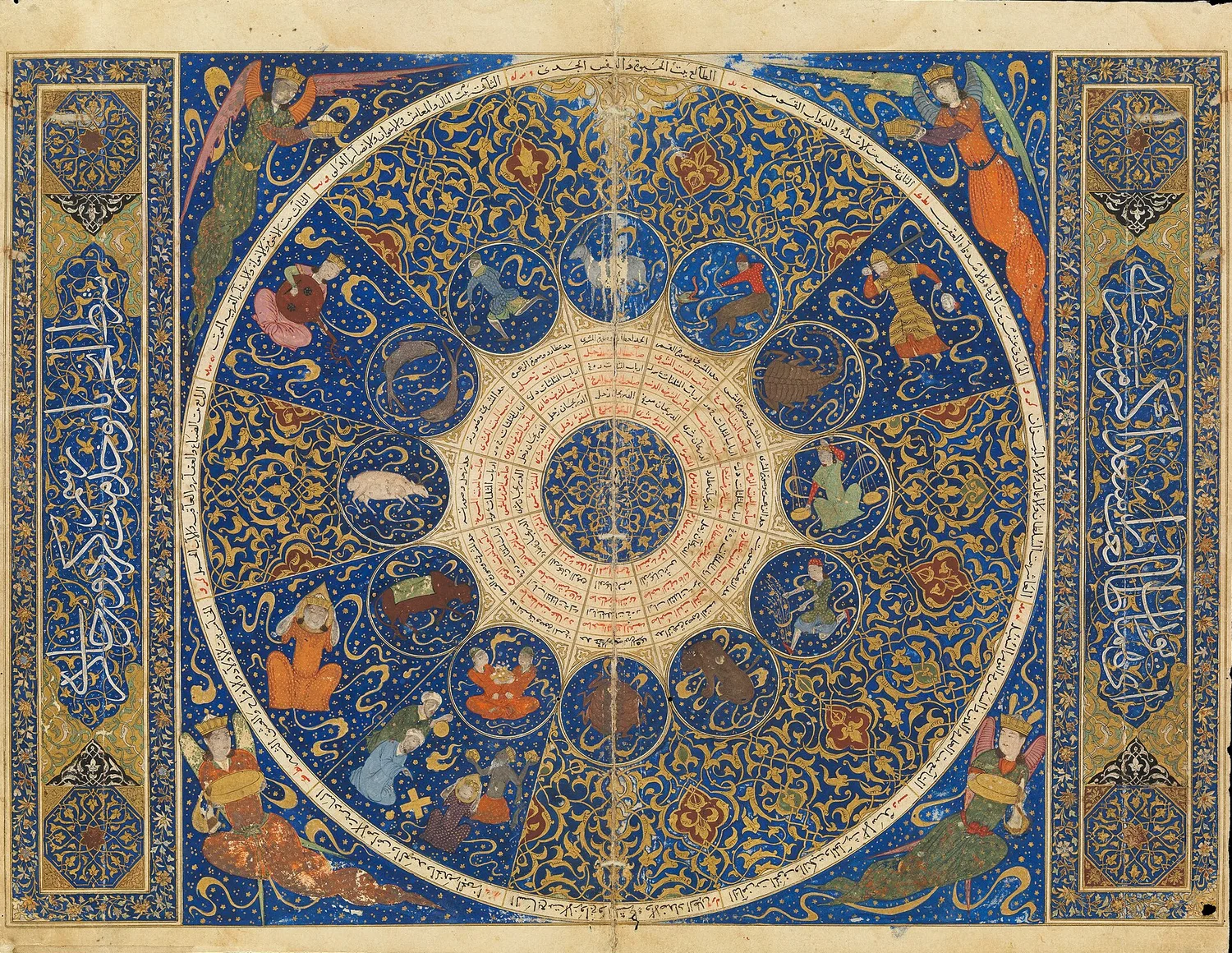
The Twelve Houses
Howard Sasportas
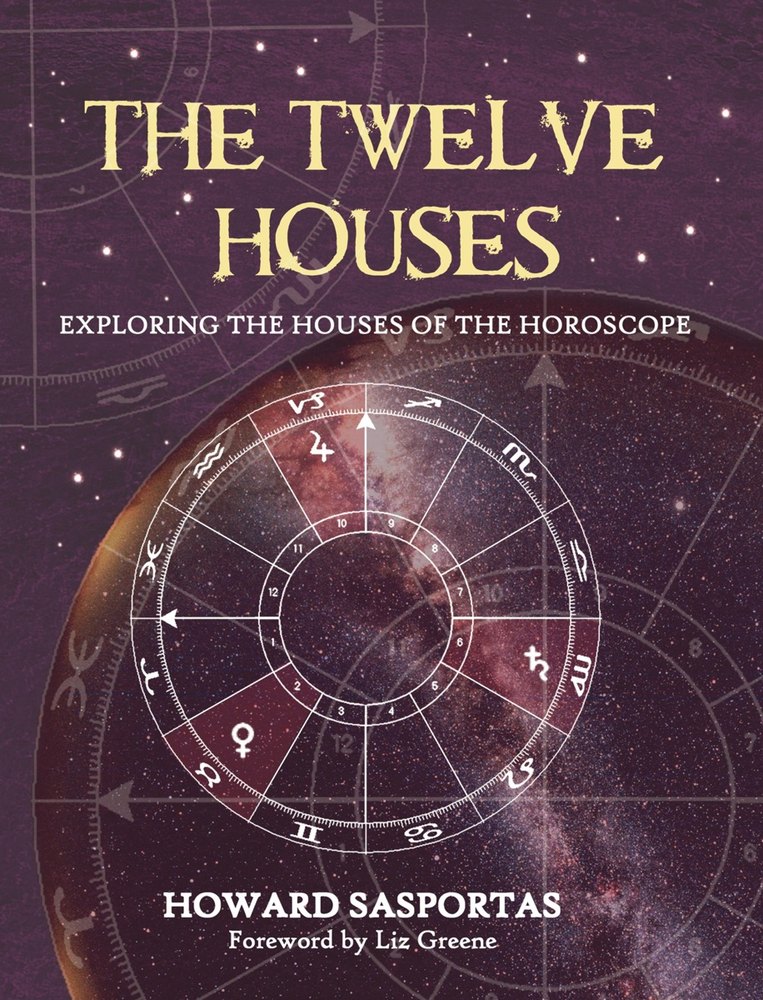
Taken together, the twelve houses tell the story of a person emerging and growing
Will Your Friends Let You Down?
Looking up your own chart and reading that Saturn in the eleventh house means “Your friends will restrict and disappoint you”, you will most likely pause, then start thinking back over which friends really have let you down. Howard Sasportas uses exactly this sentence as an example in the first chapter of The Twelve Houses: Exploring the Houses of the Horoscope. He grants that it may well be accurate, but says an interpretation like this helps no one.
He reads it another way. The core of the eleventh house is the wish to become larger than one is now, which is why people make friends and join groups. Saturn here, though, says inwardly: wait a moment, hold on to what you already know. This person has trouble with friends because he is afraid of widening his boundaries, afraid that once he lets others in, the self he had will not survive. Sasportas's conclusion is that what limits his friendships is his own limitation. Once the astrologer points out this inner conflict, he is standing at the threshold of change, and can go on to look at where the fear comes from and how he might deal with it.
Published in 1985 with a foreword by Liz Greene, the book came out in a new edition in 2007. It deals with the most often underrated of the three basic elements of the chart. He separates the three in a single sentence:
Put very simply, the planets show what is happening, the signs how it is happening, and the houses where it is happening.
Greene adds another layer in her foreword: people born on the same day have their planets in the same signs, but which houses those planets fall in depends on the moment of birth, so the houses belong most of all to the individual. The book is in three parts. Part I covers the basic principles of the houses. Part II starts from the Ascendant and the first house and reads through to the twelfth, a chapter per house, then discusses how the houses can be grouped. Part III first covers the rising signs, then goes through the Sun to Pluto, the Moon's nodes and Chiron in each house, and ends by reading a real person's chart, bringing everything before it together.
Sasportas begins his discussion of the houses with how people see. In the first chapter he describes an experiment: twenty-eight students watched playing cards flashed one by one on a screen, and the experimenter slipped in a red six of spades. Many students still called it black, because in their expectation spades are black. A planet in a house is this kind of inborn expectation. A woman with Pluto in the seventh house is born expecting to meet Pluto in partnership, and so she really does. She cannot change the fact that the planet is there, but once she sees that she is looking at partners through Pluto, she can ask what role this Pluto plays in her life, and can also look at which parts of the situation in front of her she has helped to create.
First, Watch the Calf Being Born
The fourth house is home, the ninth is long journeys, the twelfth is hospitals and prisons: the astrology textbooks of Sasportas's day mostly gave each house a few keywords like these. To learn what a person's home is like, look at his fourth house. Read this way, he says, the houses are sometimes accurate, but flat, dull and not much help. Traditional astrology was also in the habit of reading events as things that befall a person from outside, without trying to understand the part the person plays in them; “Your friends will restrict and disappoint you” is what comes of reading that way. Greene says in her foreword, too, that because the houses look the simplest, they are the least seriously studied in astrology books.
The first thing he changed was to look for the core beneath each house. The eleventh has always been called the house of friends, groups, hopes and wishes, and putting friends and wishes in the same house seems at first not to make sense. Grasp the core, “wanting to become larger than one is now”, and the pieces connect: people step beyond their old selves through friends and groups, and they must first be able to imagine a self not yet realized before they can speak of wishes.
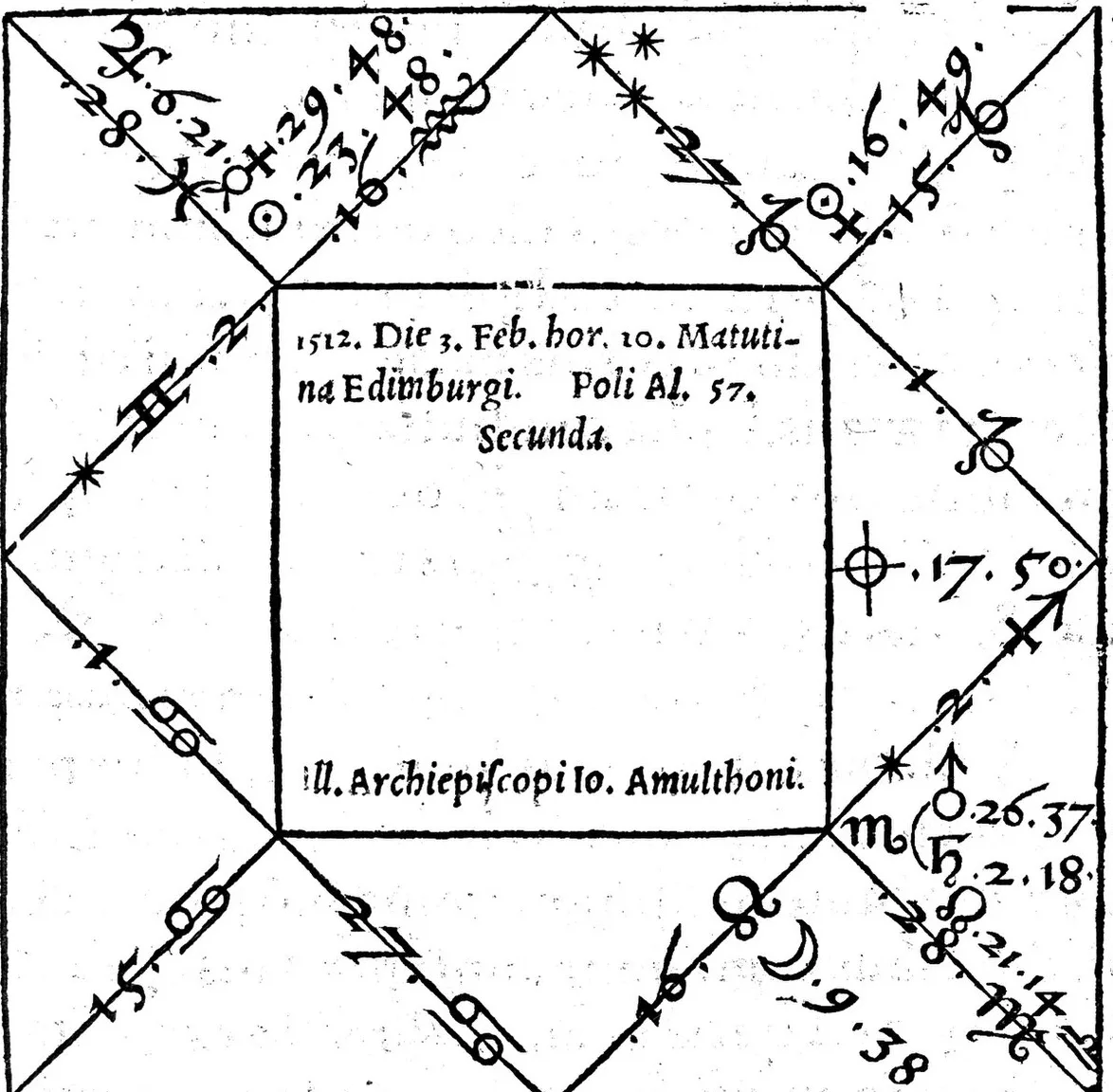
The second was to link the twelve houses into a process. He cites a small story told by the psychologist Jean Houston: as a child, Margaret Mead wanted to learn to make cheese, and her mother said she could, but first she had to go and watch a calf being born. Houston laments that we are the victims of an “age of interrupted process”: we know a little about how things begin and a little about how they end, and nothing about how they get from one to the other. Sasportas says astrology is the same. The houses have been broken into lists of keywords, and few people ask why the second house leads to the third, or why the fifth gives rise to the sixth. In his view the twelve houses together tell the story of a person emerging and growing. Born at the Ascendant, a person cannot yet tell himself apart from everything else; house by house he gradually becomes a self, and in the end that self is able to take in the whole world.
Reading the houses this way, he carries on the line of Dane Rudhyar, whom he calls in the first chapter a pioneer of person-centred astrology. Rudhyar held that the planets and signs in each house are guidance for how a person can most naturally unfold in that area of life, and Sasportas says the book tries as far as possible to read from this angle. He himself studied humanistic psychology, and studied psychosynthesis with the Italian psychologist Roberto Assagioli; in 1983 he and Greene founded the Centre for Psychological Astrology in London together. Greene writes in her foreword that the book holds on to what has stood the test of time in the tradition while bringing in psychological understanding, without hiding behind psychological jargon, so that beginners and experienced astrologers alike can read it clearly.
The Cold Quarter
In discussing the fourth house, Sasportas notes that the planets there often describe the parents as the child experienced them, not necessarily as they actually were. He gives the example of a little girl with Saturn in the fourth house, where the fourth house stands for the father. Three-quarters of the time her father is gentle and warm, yet what she remembers is the cold, critical quarter. Again and again she responds to him as a cold man, and the affection he offers is always pushed away; in time he may really lose heart and grow cold, or even avoid her altogether. Then the little girl tells herself: I always knew he was like that. Sasportas asks only one question here: was he really?
When this girl grows up, she will carry “Father doesn't love me” into later relationships, where it becomes “Men find me unworthy and unlovable.” Psychological astrology places at least half the responsibility on how the child experiences the parents. The advantage of seeing it this way is that only when people see where such ideas come from can they change them, or organize their experience differently. In the first chapter he puts this very briefly:
Awareness brings change.
The same awareness applies to projection. A woman with Mars in the seventh house, not daring to assert herself much, looks for a partner with a strong Mars, a man who is domineering and self-centered and orders her about. Only when she can bear it no longer does it occur to her that she too has the right to make demands; she begins to answer back and to speak up for herself, and in this way the Mars in her is recovered. He takes care to explain that projection is not entirely pathological. What is projected is a potential locked inside oneself, which people often see first in someone else before realizing that it has to do with them, and taking it back.
The Person with an Empty Fifth House
“My fifth house is empty. Does that mean I won't have children?” Sasportas was often asked this when teaching beginners, and some asked whether an empty third house meant they had no brains. His answer is that, strictly speaking, there are no empty houses: a house with no planet in it still has a sign. So first look at the sign in the house, then at which house and sign the ruler of the cusp sign is in and what aspects it makes; if there is another sign within the house, its ruler should be looked at too. What matters in a chart often shows itself in several places at once, which is sometimes called the “rule of three”.
Whatever planet is in the seventh house, he suggests asking why you are drawn to precisely these qualities in the other person, and what that person is living out on your behalf. Someone with the Moon in the seventh, for instance, sometimes meets partners who are moody and unsettled; is part of that moodiness really their own, simply not yet claimed? In his reading, the house a planet occupies shows how you can best approach that planet in that area of life.
The fourth house also governs how we end things. Venus closes things neatly and fairly, Saturn drags on and will not let go, the Moon and Neptune slip quietly away, and Mars and Uranus “go out with a bang”. Look back at how your own departures from jobs and breakups have ended, and you can often find the reason in the fourth house.
Chapter by Chapter
The book has thirty chapters, followed by a conclusion and two appendices. Part II has a chapter for each house and Part III a chapter for each planet, so below they are taken together by part.
Part I: The Landscape of Life — Chapter 1: Basic Premises; Chapter 2: Space, Time and Boundaries
The first chapter sets out his position. He apologizes for the entry-by-entry format of Part III, saying its interpretations are only rough outlines and should not be taken as gospel. He gives an example: if a woman and her pet frog were born at the same time and place, their two charts would be identical, but the frog lives out the chart at a frog's level of consciousness and the woman at her own. So no part of the chart can be read rigidly; every person is more than the sum of the parts of the chart.
The second chapter explains where the houses come from. The signs divide the circle that the Sun, Moon and planets appear to travel around the Earth; the houses divide the day of the Earth's rotation. The word horoscope originally meant “consideration of the hour”, and the chart is a map of time. How the four angles are further divided into twelve houses is one of the great controversies of astrology. He says he leans toward quadrant systems; in this book the cusp of the tenth house is the Midheaven, and the cusp of the fourth is the IC.
Part II: Mapping the Journey — Chapters 3 to 14: The Ascendant and the First House to The Twelfth House
Part II gives each house a chapter. Each first describes the core of the house, then how the signs and planets in it modify it. Chapter 3 is on the Ascendant, which he calls the lens through which we see the world. Faced with the same new opportunity, someone with Sagittarius rising says, “Great, when do I start?” Someone with Capricorn rising worries first: “Must I do it? I know I really should. Am I good enough? Oh, what a big responsibility!”
Each house follows on from the one before. In the fifth, a person expresses himself freely, and the trouble is not knowing when to stop; the sixth then comes to point out the limits. He gives the sixth house a few speeches addressed to the fifth. You have been up two nights and that painting still isn't finished. The romance is going strong, but have you thought about the practical problems of living together, not to mention that you can't stand his aftershave? At last week's party you talked nonstop, and the shy boy in the corner never got a chance to open his mouth. By the end of the sixth house, a person is much clearer about who he is, and the last six houses have to connect him to others again; otherwise, he says, life would be too lonely.
In discussing the fourth and tenth houses, he deals with an old problem. Traditionally the fourth house is the mother and the tenth the father, but Greene found in her consultations exactly the reverse. He does not fix which house is which parent. The one who spends the most time with the child and is responsible for teaching it to fit into society he calls the “shaping parent”, and places in the tenth house. The less visible one he calls the “hidden parent”, and places in the fourth. Which parent is which can only be judged after talking with the client.
Chapter 15: Grouping the Houses
Chapter 15 divides the twelve houses by hemisphere, by quadrant, into angular, succedent and cadent, and by element. Tradition says the cadent houses are weak, but he cites the statistics of the Gauquelins: in the charts of athletes, scientists, writers and other professions, the planet corresponding to the profession was in fact found more often in the cadent houses. He says this is not surprising, since the ninth and twelfth houses seek a meaning larger than oneself, while the third and sixth seek to set oneself apart from others, and these two urges are precisely the central dilemma of the human situation. The chapter also takes up the conflicts between houses pair by pair. A man with Venus in Leo in the first house, for example, square a Taurus Moon in the tenth, wanted to be an artist, while his mother insisted that he choose a practical job.
Part III: A Guide to Life's Possibilities — Chapter 16: General Guidelines: The Planets and Signs through the Houses; Chapter 17: Ascendant Types
Chapter 16 explains how to read Part III. When a planet is in a given house, its function expresses itself most naturally in that area of life. Conversely, the affairs of that house are best handled in that planet's way. The planet is also what we are born expecting to meet in that area of life. The three steps for empty houses mentioned earlier are in this chapter too.
Chapter 17 goes through the rising signs one by one, each paired with the opposite Descendant sign, since the Ascendant is the part we identify as ourselves, and the Descendant the part we do not claim but meet in other people. On Libra rising, he mentions a friend who loves sunbathing. When England has one of its rare sunny days, she still dutifully drives to work, and when her day off comes, it rains. So Libra rising has to learn to make a choice and take the consequences.
Chapters 18 to 27: The Sun and Leo through the Houses to Pluto and Scorpio through the Houses
These ten chapters form the body of Part III. Each planet, together with the sign it rules, gets a chapter, which first discusses the planet itself, in most chapters through its mythology, and then its placement in the first through twelfth houses. His standard procedure is to look at the house a planet is in, then at the house containing the sign it rules, and read the two houses together. The French poet Jean Cocteau, for example, had the Sun in the third house, ruling Leo on the cusp of the fifth, and in order to convey his ideas to others he tried film, poetry, the novel and the theater.
The fifth is the house of play, and for each of the six planets from Mars to Pluto in the fifth, he has it walk like a child into the same sandbox. Mars builds a castle, and if yours is better than his, watch out for a face full of sand. Saturn hesitates on the way in, looking worried: what if my castle isn't any good? Am I using this shovel right? The other children have long since gone off to the swings, and as the sun sets he is still laying the foundations. Neptune finally gets out of the house, and just as the castle is taking shape in his head, Mercury arrives to say your mother is calling you home.
On Saturn, he begins with its severe side. In Saturn's house we expect difficulty and restriction, approach things with fear and caution, and are full of “oughts” and “shoulds”, and self-criticism crushes the creative impulse just as it surfaces. Then he turns to Saturn's other face, a kind of Celestial Schoolteacher who uses pain to remind us where we need to develop. Running from it only makes things worse; facing it, the feeling of not being good enough gradually turns into solidity and a sense of worth, and in time we often become teachers in the very area of life we found hardest to master.
Wherever Saturn is in the chart is where we have the potential to turn difficulties into strengths.
He compares this with Jupiter as well: in Jupiter's house we usually land on our feet, while on Saturn's ground one careless step can bring us to our knees.
Chapter 28: The Moon's Nodes through the Houses; Chapter 29: The Possible Effects of Chiron through the Houses
The chapter on the Moon's nodes reads the two houses of the north and south nodes. The house of the south node holds abilities already mastered, where we go out of instinct and habit; it is like a resting place where we can digest experience, recover our strength and set off again.
The south node represents what has already been packed in the suitcase when the journey began.
What is in the suitcase can be used at any time, but the house of the north node is new territory, entered only by will and choice; lazy people, he says, will not get across that threshold. There is no need to choose between north and south; it is better to have both; but if you stay too long in the house of the south node, you will add nothing new along the way. Someone with the north node in the sixth house and the south node in the twelfth, for example, needs to take more care over the practical matters of each day, daydream less, and stop quietly waiting for someone else to look after them.
The title of the Chiron chapter speaks of its “possible effects”, since Chiron was only discovered in 1977, and he reads it through mythology. Chiron was rejected by his mother at birth, so Chiron's house is where we are especially sensitive to rejection. The chapter describes how people live with the wounds they have suffered, and also how many come through them to understand others better, going on to teach and help them.
Chapter 30: A Case Study
The last chapter is a real person's chart. Kate is in her early forties and works as a secretary by day. Sasportas saw her twice, two years apart, comparing her chart with the experiences she described. He first sets out what has to be looked at together when reading a house: the aspects of the planets in the house, the signs on the cusp and within the house, the house, sign and aspects of the cusp sign's ruler, and the rulers of any other signs in the house. Then he goes house by house, first writing out the signs and rulers, then setting Kate's own words beside them. With Jupiter in the second house, she says that whenever things are at their worst, she always manages to scrape together the money she most needs from somewhere. Her sixth-house cusp is in Capricorn, and she admits she is not good at daily chores: she always puts off paying the electricity bill until the final notice arrives, and keeps losing important documents. This chapter demonstrates how the item-by-item interpretations before it come together in a single chart.
Concluding Thoughts and Appendices
The conclusion opens with Greene's words: astrology cannot make choices for a person, just as a map cannot decide for itself whether to set out. An apple tree, he says, knows it is meant to bear apples, and deep down a person knows what he is meant to become, but has lost touch with that knowledge. The chart helps a person become aware of what he might become; whether to do it is his own choice. Appendix 1 lists the key points of each of the twelve houses in a short list. Appendix 2 introduces the main house systems. He says the fiercest debate about the houses is over which house system to use; each has its strengths and weaknesses, and in the end the student must decide.
How to Read This Book
Sasportas says the book can serve both as a tool for personal growth and as a guide to chart interpretation. Parts II and III are also read differently. In Part II the houses link one to the next, and only by reading straight through from the first to the twelfth can you see that it is telling how a person grows up. Before it, read the position he sets out in Chapters 1 and 2, then Chapter 3 on the Ascendant and the first house, and the chapter on the house your Sun is in. Part III is the longest and works best as a reference: look up the houses your own planets are in, then read Kate's case in Chapter 30 to see how he brings it all together.
The book also has its difficult and dated side. Written in 1985, it draws its famous examples mostly from the European and American actors, writers and politicians of that era, whom readers today may not recognize. It borrows heavily from psychologists such as Freud, Jung and Melanie Klein, some of whose ideas now look old, and a few passages carry an occult coloring. Part III is written entry by entry, a format he himself apologized for, and no single interpretation should be applied to yourself as it stands. One more point: he uses a quadrant house system, and birth times are often estimates, so a planet close to a cusp may fall into the neighboring house under a different house system or with a slightly different birth time.
The houses depend on the moment of birth, so this layer can only be read against a person's own chart. Your Twelve Areas of Life in Depth reads from your Ascendant and first house all the way to the twelfth. Where a house holds planets, it describes how those planets look in that area of life. Empty houses are not skipped either: following Sasportas's three steps, it reads from the cusp sign and its ruler where that area of life is heading. The house of your south node holds what you brought in your suitcase, and the house of your north node is the new territory you can enter only by choice; the report discusses these two houses together. Because he saw the twelve houses as the story of a person growing up, the report ends by taking the twelve houses together, looking at which half your planets gather in and how that story unfolds in you. It reads the layer of the houses; the aspects between planets in a house and other planets are discussed within that house, and the trends of the coming years are not included.
At the very end of the conclusion, Sasportas tells a story. On his deathbed, the Hasidic rabbi Susya said that in heaven they would not ask him why he had not been Moses; they would ask him why he had not been Susya, why he had not become what only he could become. Sasportas then turns the question to the reader:
Why don’t you become what only you can become?
He puts this sentence on the last line of the conclusion, leaving it for those who have read through the twelve houses to answer for themselves.
 Your Twelve Areas of Life in DepthSee report · $19