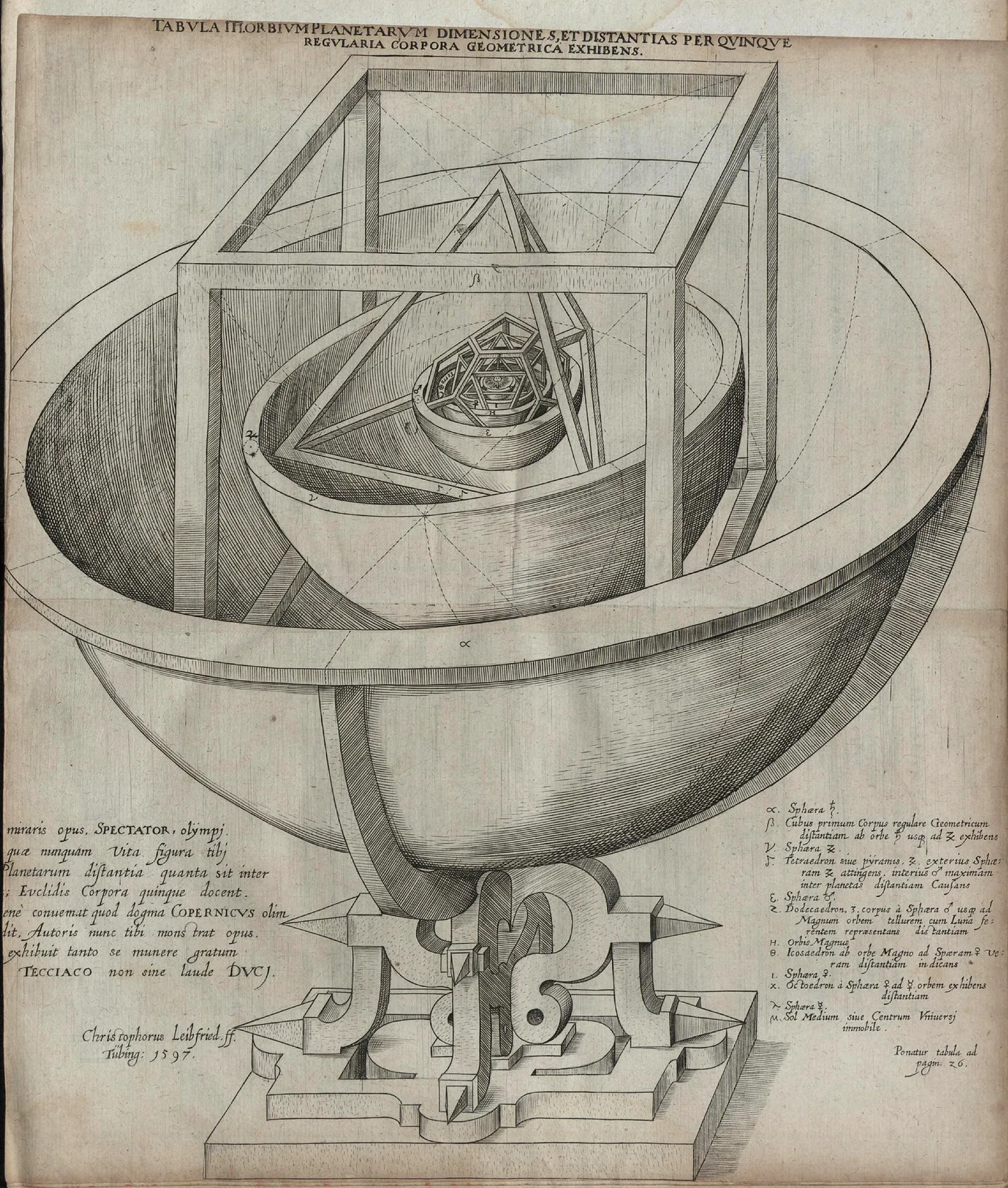
Harmonics in AstrologyAn Introductory Textbook to the New Understanding of an Old Science
John Addey

The number by which the circle is divided is the key to reading one layer of relationship.
Does One Day Change Your Sign?
People born in the few days where two signs meet are often unsure which sign they belong to, as if being born a day earlier would give them a different character. In Harmonics in Astrology, the English astrologer John Addey checked whether the boundaries between signs really matter so much. He had the Sun positions at birth of 7,302 doctors and plotted them degree by degree along the zodiac. The graph had its highs and lows, but both the high stretches and the low stretches ran straight across the sign boundaries, as though the boundaries did not exist. From this Addey concluded that as the Sun moves from one sign into the next, its influence falls smoothly from a high to a low and slowly rises again; it does not suddenly change character at the moment it crosses thirty degrees.
The book was finished in June 1975, exactly twenty years after he began this research, and was published in 1976 by the Cambridge Circle in the United States. The word “harmonics” in the title sounds abstract, but what it does is simple: divide the whole circle of three hundred and sixty degrees by a number and look at the points that result. Divide by 4, and there is a point every ninety degrees around the circle, four in all. Divide by 5, and there is one every seventy-two degrees. Addey held that these evenly spaced points are where the quality represented by that number is expressed most fully, that it is weakest exactly between two points, and that the change from strong to weak and back is gradual. So, going once round the circle, it is like a wave bent into a ring, rising and falling several times. Dividing by a given number gives the harmonic of that number.
The aspects familiar to traditional astrology fall within the same idea. The opposition divides the circle into two, the trine into three, the square into four. Addey extended this to every number: five, seven, nine and numbers larger than twelve each have their meaning, and the zodiac, the houses and the aspects all work on the same principle. He set this down as a basic rule: the number by which the circle is divided is the key to interpreting that layer of relationship.
He came to see it this way because, counted in the traditional manner, some data showed nothing at all. He used the birth data of 972 nonagenarians, all listed in the British biographical dictionary Who Was Who: people who had achieved something in their fields and had all lived past ninety. Addey looked at the aspects between the Sun and Saturn at their births. Counting, as tradition does, the cases within five degrees either side of the conjunction, opposition, trine, square and sextile gave 217 in all; pure chance would give 216, almost exactly the same. The aspects of the Sun with Mars, Jupiter and other planets were the same. But when he counted the Sun–Saturn angles in five-degree cells and then laid six sixty-degree stretches on top of one another, the rise and fall appeared: a wave every sixty degrees, about ten per cent above average at the peak. The five degrees either side of the traditional aspect points were precisely where this wave came close to average. Counting in the traditional way, in other words, picked out exactly the flattest stretches.
The book has three parts. The first is about waves and how to find harmonics in the three circles. The second is about application, from the navamsa of Indian astrology to the fifth harmonic chart and other harmonic charts, and then to aspects, degree areas and directions. The third deals with problems not yet solved. The subtitle calls it an introductory textbook, and Addey does teach readers to take graph paper and simple addition and work through a set of birth data themselves.
From Twelve Boxes to a Wave Around the Circle
Addey once compared it to building a house from old bricks salvaged from other houses, each brick still with half of another brick stuck to it. Inherited astrological knowledge is like that, abundant and mixed: which zodiac to use has long been disputed, even how many houses there should be is argued over, and the orbs of aspects can only be set by rough rule of thumb. So he did not want to patch up the old teachings; what he was looking for were the true basic bricks.
What dissatisfied him most were the “boxes”. Tradition treats the twelve signs as twelve boxes, and a planet in a box takes on the colour of that sign entirely. Aspects work the same way: if the angle between two planets is within orb, there is an aspect; outside the orb, the relationship seems to drop into a void. What Addey found least defensible was this idea that two planets can suddenly cease to have any important relationship. On the harmonic view, every angle is some fraction of the circle and lies within the rise and fall of some number, only with different weight. So the rule he gave for orbs is that the larger the harmonic number, the proportionally smaller the orb. If the basic orb for the whole circle is taken as 12 degrees, the opposition has 6, the trine 4, the square 3, and the quintile (72 degrees) about 2 degrees 24 minutes. With orbs narrowed in this way, the angles usually called “minor aspects” become just as rare, and just as important, as the major ones.
When Addey introduces harmonics, his first examples use the data of the French statistician and psychologist Michel Gauquelin. From around 1950 Gauquelin set out to see whether the claims of traditional astrology would stand up statistically, and published the birth data he collected and his main experiments in full, in sixteen volumes. The Saturn of doctors and scientists and the Mars of soldiers and athletes all come from this data. Indian astrology already had a ready-made practice. Ask an Indian astrologer to read a chart and he will almost always begin by calculating the natal chart and the navamsa. Addey says this ancient practice of dividing a circle into smaller circles is in fact a practical application of the harmonic idea. The 90-degree and 45-degree dials used in the West by the school of Ebertin are likewise the fourth and eighth harmonic charts.
Readers who know astrology always want to translate the new ideas back into familiar old terms. Addey knows this, and where translation is possible he helps; but he also warns that in many places it is not:
It is better to learn to think harmonically.
In other words, when you see two planets seventy-two degrees apart, don't first ask whether they are within orb; first see how many parts they divide the circle into.
The Difficulty Lies in Not Knowing
In Gauquelin's data, the rise and fall of Saturn in the charts of doctors and scientists, and of Mars in the charts of soldiers, is dominated by the fourth harmonic. From this Addey surmised that the number four is connected with “difficulty-effort-achievement”, since all these groups were people who had achieved something in their professions. At the same time he admits that these words are only adequate for now and may not reach the root of four. Yet in sports champions Mars is strongest in the third harmonic, with the fourth close behind. Addey's explanation is that sport has an element of “play”: champions act more from enjoyment and enthusiasm than doctors and soldiers do, so three is connected with enjoyment, while four leans toward effort and duty.
In the chapter on other harmonic charts he takes four further. Qualities such as courage and patience cannot be practised in a vacuum; they are developed only in situations that truly demand courage and patience, and that is the kind of situation the square brings. As for why the square feels hard, Addey believes the reason is uncertainty. Effort itself is not painful, for positive action is good in itself and pleasant too:
It challenges us to do something which we do not know whether we can do or not — until we have done it!
He goes on to say that when the challenge has been taken up and met, looking back on the square brings no less satisfaction than a trine, perhaps more, because there is a solid value in what it produces. If you have had a stretch of time when you took on something you were unsure of, doubted yourself every day, and yet when it was done felt it was the most solid thing you had gained in years, that is the experience Addey is describing.
The book itself carries this kind of uncertainty. At the very start Addey says he is afraid of mathematics, that probably not one reader in twenty is more afraid of it than he is, and he apologizes in advance to mathematicians and statisticians for his naive, elementary methods. Some views in the book do not square with each other, which he says is part of exploring new concepts; he does not apologize for these anomalies. Where he is speculating, he stops to say so, and when trials turn out well or badly, he reports them as they are.
Two Planets Seventy-Two Degrees Apart
Two planets about seventy-two degrees apart make an angle that is not among the five aspects in common traditional use. For Addey, they form a conjunction in the fifth harmonic chart, which speaks of the craft you are good at and where your power is directed. He took “power” as the keyword of the fifth harmonic, a power that can be used to create or to destroy. Nor need the craft be a profession. If work is done only to earn a living, with little creative impulse in it, Addey says the fifth harmonic chart often describes a hobby. So for someone who handles spreadsheets in an office by day and goes home in the evening to cook a meal with real care, what this chart shows may be the evening's work.
There are other angles you may never have noticed, such as twenty-four degrees and its multiples. Addey sees them as five combined with three: five is a kind of ability, three is enjoyment, so they speak of an ability a person likes to use and uses well. The Moon and Venus twenty-four degrees apart may describe someone who enjoys the give and take of social life, gets on well with people and keeps things around them running smoothly, which Addey calls an extremely important art.
Chapter by Chapter
Chapter 1: What This Book Is About
Where the book comes from and whom it is for are made clear at the outset. Addey says the new picture emerged by itself during his long years of statistical work on birth data. He also says who will gain most from the book: those who love astrology for its own sake, who are not content with ready-made formulas, who want to see the principles behind them, and who are willing to suspend judgment for a while and let the whole picture take shape in the mind little by little.
Chapters 2 to 4: Introducing Waves, More about Waves, Down to Work
The first two of these chapters are a short lesson on waves that can be followed without knowing any astrology. To understand a wave you need its length, its amplitude and its phase. Amplitude is how far above or below the average it goes; phase is the degree at which the crest falls. Addey uses a plucked string: the whole string vibrating gives the fundamental note, and if you touch the midpoint of the string lightly, each half vibrates separately and the pitch rises an octave. Addey calls this the second harmonic, because the string has been divided into two.
The hands-on material is Gauquelin's 3,647 scientists and doctors. The distribution of their Saturn around the diurnal circle (the circle in which the houses lie) rises just after the Ascendant, just past upper culmination, just after setting and just past lower culmination. Addey calculated that this is mainly a fourth harmonic, with an amplitude of about twelve per cent, with a weaker third harmonic laid over it. The two waves rise together near the Ascendant and cancel each other in two other places, which is why the peaks are not the same height.
Chapter 5: A Conceptual Framework for the Symbolism of Harmonics
This chapter explains why one must look at large numbers of charts. Addey uses the image of a magnet: lay paper over a magnet and sprinkle iron filings on it. One filing tells you nothing, twenty may mislead you, and only when enough are scattered does the shape of the field appear. Gather enough charts of one kind of person, and each person's planetary positions are a filing. In this chapter he also says that tradition's exclusive preference for twelve is extreme poverty, like a botany that recognized only leaves and petals in threes, fours and twelves, and never fives, sevens or nines.
Chapters 6 to 8: Harmonics in the Diurnal Circle, Harmonics in the Ecliptic Circle (I) and (II)
Now it is the reader's turn to carry out a harmonic analysis by hand, with nothing but addition and graph paper. The material is the Mars of Gauquelin's 3,046 soldiers, in cells of ten degrees, giving 36 numbers, which are then arranged in four rows of nine, aligned and added. Waves that do not fit into ninety degrees cancel out, leaving the fourth harmonic and its subharmonics. Addey's hand calculation estimated the amplitude at about 11.8%; the computer gave 11.5%.
Turning to the zodiac, this is where the example of the 7,302 doctors from the opening appears. Addey goes on to explain why astrological statistics in the past had such difficulty producing good results: counting in twelve boxes of thirty degrees, the positive and negative halves of the twelfth harmonic cancel each other within each box exactly, so the most important component is lost in the very act of counting. For the Sun of 1,974 British clergymen, the most prominent of the 1st to 180th harmonics are the 7th, 49th and 98th, all in the series of seven, and the connection of seven with religion and sacred things has always been common knowledge.
Chapters 9 and 10: Harmonics in the Aspect Circle, Recapitulation
Addey says Chapter Nine is the hardest in the book, for reader and author alike. The chapter also answers a doubt: on this account, wouldn't the square always have an orb of twenty-two and a half degrees on either side? His answer is that the main harmonics almost never act alone but always bring a set of subharmonics with them; with the eighth and twelfth harmonics added to the fourth, the square becomes stronger and its orb narrower.
The first nine chapters are finally gathered into one sentence: each circle is a whole; divide it by a number and you get evenly spaced points on it, and a planet's relation to those points determines whether its relation to that quality is positive or negative. Here Addey writes:
The circle is the most comprehensive of symbols.
So what the astrologer most needs to understand is the circle and its division, and for this reason he calls astrology “the algebra of life”.
Chapter 11: The Navamsa Chart
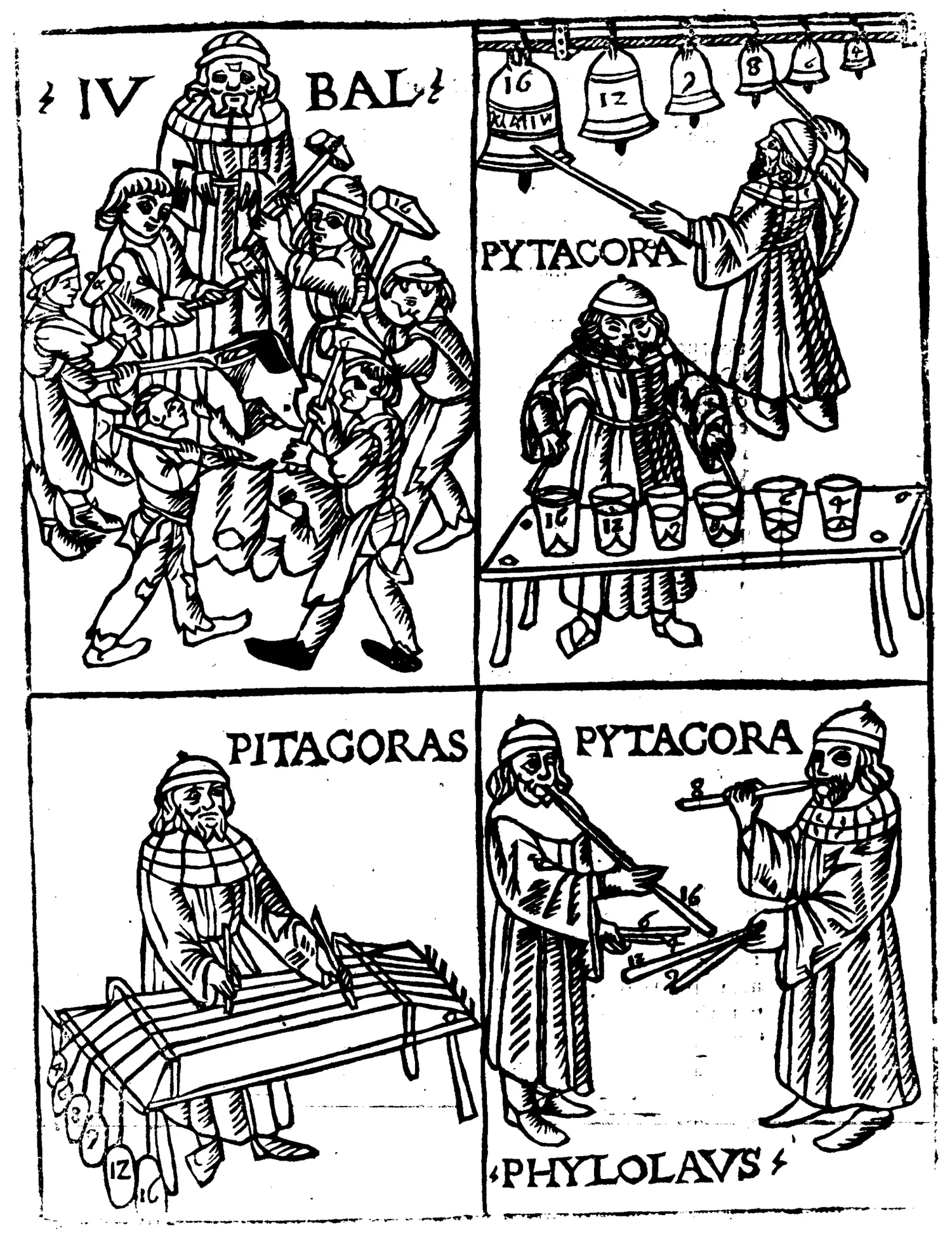
The navamsa (the ninth harmonic chart) is an old method of Indian astrology in which each sign is divided into nine parts. Addey looks at it another way: in fact the whole circle is first divided into nine, and each part then divided into twelve small signs, which is exactly the harmonic method. Indian tradition uses it to look at the marriage partner; Addey explains it through the number nine. Pythagoras and other ancient philosophers held that a thing passes through nine stages in unfolding from its innermost idea to its outward fulfilment. So it is said that the navamsa is to the natal chart as the fruit is to the tree, and the embodiment of a person's ideals over a lifetime often corresponds to his navamsa. He gives Churchill's navamsa as an example. Its third house is strong, and the navamsa Mercury is conjunct the natal Sun. Churchill's greatest gift in life was precisely writing and speaking, and his History of the English Speaking Peoples is one fruit this chart bore.
Chapter 12: The Fifth Harmonic Chart
The fifth harmonic chart divides the circle into five small zodiacs of seventy-two degrees; it is calculated by multiplying a planet's longitude by five and subtracting the nearest multiple of three hundred and sixty. Addey explains the meaning of five from its make-up: five is two plus three, two being matter not yet formed and three being form. What the artist does is unite form and matter in the mind, and so do the sculptor, the town planner, the cook and the doctor, so five is connected with mind. The fifth harmonic chart therefore shows what kind of abilities a person has, and also what kind of marriage. Addey believes it describes the marriage itself, not the partner.
His example is several presidents of the Astrological Association and of the Astrological Lodge of London, including himself and Charles Carter, together with Dane Rudhyar from America. Taking only the Sun, Moon, Ascendant, Midheaven, Saturn and Uranus for each, Addey lists thirty of these positions that, converted to the fifth harmonic, all fall near zero degrees of cardinal or mutable signs, about two thirds of them within two and a half degrees; converted back to the natal chart, that is an orb of only half a degree. He also reports honestly the six that did not make the list. What Addey thinks more important is that Saturn and Uranus often take part in the fifth harmonic, perhaps because such contacts deepen the mind.
Chapter 13: Other Harmonic Charts
The number seven has been much neglected in traditional astrology. Addey believes it is connected with inspiration, for this reason:
Inspiration is, by definition, something which is breathed into the life from without
So inspiration itself is not in the chart; the seventh harmonic chart shows the degree and direction in which a person receives it. He takes the example of people with the Sun conjunct or opposite Saturn in the seventh harmonic chart: Saturn either sets obstacles in the way of creation or makes expression unusually fluent. Beethoven composed with enormous labour; Cézanne had a sitter pose more than a hundred times for a portrait and still gave it up; Schubert wrote music with rare fluency.
Chapters 14 and 15: New Light on Aspects, Harmonics and Degree Areas
Two planets seventy-two or one hundred and forty-four degrees apart are conjunct in the fifth harmonic chart, and this is how harmonic charts and aspects join up. The rule that orbs shrink in proportion to the harmonic number is also set down here. At the same time Addey adds a proviso: an aspect does not suddenly vanish at the edge of its orb; it only recedes into a faint voice in the chart's chorus.
Every map is different and every aspect is a case on its own.
So he treats that table of orbs only as a working principle.
Why certain degrees are special, Addey thinks, is that several harmonics happen to coincide at one point. A good tennis player needs quick reactions, a good touch, a judgment of the ball in the air and a competitive spirit; each corresponds to a harmonic, and where several coincide a peak appears at a certain degree. For the Sun of the 7,302 doctors, the highest peak is at 22 Taurus, and Charles Carter had long since said that medical ability lies at 22 degrees of the feminine signs.
Chapter 16: Harmonics in Progressions, Transits and Other Direction Procedures
Addey sees life as a series of unfolding processes, in which events are not isolated. The applying, exact and separating phases of a progressed aspect often correspond to the before, during and after of an event: first money is tight, then a promotion and new responsibility, then the purchase of a house. So he advises readers to think less about exact aspect points and more about the ebb and flow of progressions. This chapter also contains a proposal he himself calls somewhat speculative: the harmonic charts may correspond in turn to the years of life, the 18th harmonic chart to the 18th year, the 40th to the 40th. A year in childhood brings great change, and the older one gets the smaller the change; the harmonic charts, one after another, likewise differ less and less. He tried it, with mixed but promising results, and he also believes it describes the deeper, more stable processes of life rather than passing events.
Part Three: Problems (Chapters 17 to 22)
Part Three consists of problems left for research. The tropical and sidereal zodiacs have been argued over for decades, and Addey says the very existence of this argument shows something is wrong somewhere. In cycle research, the ideal peaks of the eight-year cycles of 37 phenomena all fall around 1961, and he sees astrology as part of this wide field of research. The book's conclusion says that it answers how astrology works, not why.
This part also deals with birth times. Addey made an unexpected discovery: only when measured from about nine degrees above the Ascendant do the strong harmonics line up neatly at zero or one hundred and eighty degrees. The simplest explanation he could think of was that registered birth times are often late, by about half an hour, because in Europe it was mostly the father who went to register the birth. He even ranked the fathers by group: the fathers of scientists were ten to fifteen minutes late, the fathers of painters more than an hour, adding that no one has studied how far the judgment of a man who has just learned he is a father may be affected.
In the chapter on heredity he takes his own family as an example. His father's Sun falls on the Saturn/Uranus midpoint, about seventy-two degrees from each, exactly a fifth of the circle, and this set of positions, slightly varied, appears again in his chart and in his children's. He deliberately chooses only this set of positions and leaves out every other factor, so that the resemblance across three generations can be seen clearly. His great-grandmother was born on 25 May 1819, the same day and month as his daughter, both with the Sun at 4 Gemini. The Moons of the women in the family are similar: generation after generation, each time a son married a woman whose Moon was in the same place as his mother's. Addey also says that when a certain position has been neglected in a family for a generation or two, later generations often restore it, frequently through marriage.
Appendix I and Appendix II
Appendix I urges readers to do small-scale research of their own. Addey believes that those who research by hand stay close to the material and notice small things that computer users miss. Using the Sun positions of 334 hydraulic engineers, he shows step by step how to find the harmonics in them. Appendix II discusses how many sections a circle can be divided into without distortion.
How to Read This Book
In the first chapter Addey warns not to expect to understand it all at one go. The difficulty lies not in the mathematics but in the symbolism of numbers, and it is best to put the book down after a passage and think. So read the first ten chapters slowly; they are the foundation of the whole book. Chapters Two and Three, on waves, can be followed without knowing astrology. Chapter Nine he himself calls the hardest, and Chapters Seventeen and Eighteen he suggests skipping at first and returning to after the later chapters.
The book has its limits too. Most of its examples are statistics on groups, and some samples are very small, such as the 116 jockeys in Chapter Sixteen, all men, which Addey himself says serve only to demonstrate method. The meanings of many numbers are his conjectures, which he labels honestly, and in reading you need to keep clear which is data and which is conjecture. One more thing to know: the Ascendant and Midheaven of a harmonic chart are only symbolic points, and the larger the harmonic number, the more the chart changes with a birth time off by a minute or two; Chapter Eighteen also found that registered birth times are often late. So judgments involving the Ascendant and Midheaven in harmonic charts are more reliable the more accurate the birth time.
The examples in the book all concern groups, but a question Addey raises in Chapter Thirteen is about a single chart: to which harmonic must a chart be converted for the planets concerned all to be conjunct? Your Harmonics in Depth asks this question of your moment of birth. The report first counts how many groups of each number there are in your chart and whether that is more or fewer than in charts generally; where there are notably many it points them out, and where everything is about average it says so plainly. Orbs narrow with the number, following Addey's rule.
The report reads the fifth harmonic chart most closely, in two sections. Where your Sun, Moon, Ascendant and Midheaven fall in the fifth harmonic chart, and which planets they form aspects with, speaks of the craft you are good at, of where your power is directed, and of how you work together with another person in love. The ninth harmonic chart speaks of the ideal in your heart, that is, of what fruit the tree Addey describes will bear. Where inspiration comes from is read separately from the seventh harmonic chart. All positions in the harmonic charts are calculated precisely by software.
It reads your chart from the single angle of harmonics, covering abilities, inspiration and ideals; the other areas of the natal chart need a full natal reading. In the appendix Addey urges readers to calculate by hand, saying there is no more effective way to understand harmonics than to use them yourself, and your own chart can be your first piece of data.
 Your Harmonics in DepthSee report · $19